


Two importers buy identical goods at the same factory price. One pays thousands more to land them in Riyadh — because of three letters in the contract. Incoterms decide who pays for what, who carries the risk, and where responsibility passes from seller to buyer. Choose the wrong one for a Saudi import and you inherit costs, customs headaches and delays you never quoted for.
We're BAFCO International — 30 years clearing and delivering imports across Jeddah, Riyadh and Dammam. This guide explains all 11 Incoterms, then focuses on the four that actually matter for Saudi importers, and shows how each interacts with SABER, VAT and customs.
Not sure which term to agree with your supplier? Ask BAFCO before you sign — we'll tell you which Incoterm protects you.
What Incoterms are (in one minute)
Incoterms (International Commercial Terms, published by the International Chamber of Commerce) are the standard three-letter rules that split responsibility between seller and buyer on three things: who pays each cost, who bears the risk at each stage, and who handles export and import formalities. They're updated periodically — the current set is Incoterms 2020 — and they apply to a sale contract, not the shipping contract, so they travel with your purchase order.
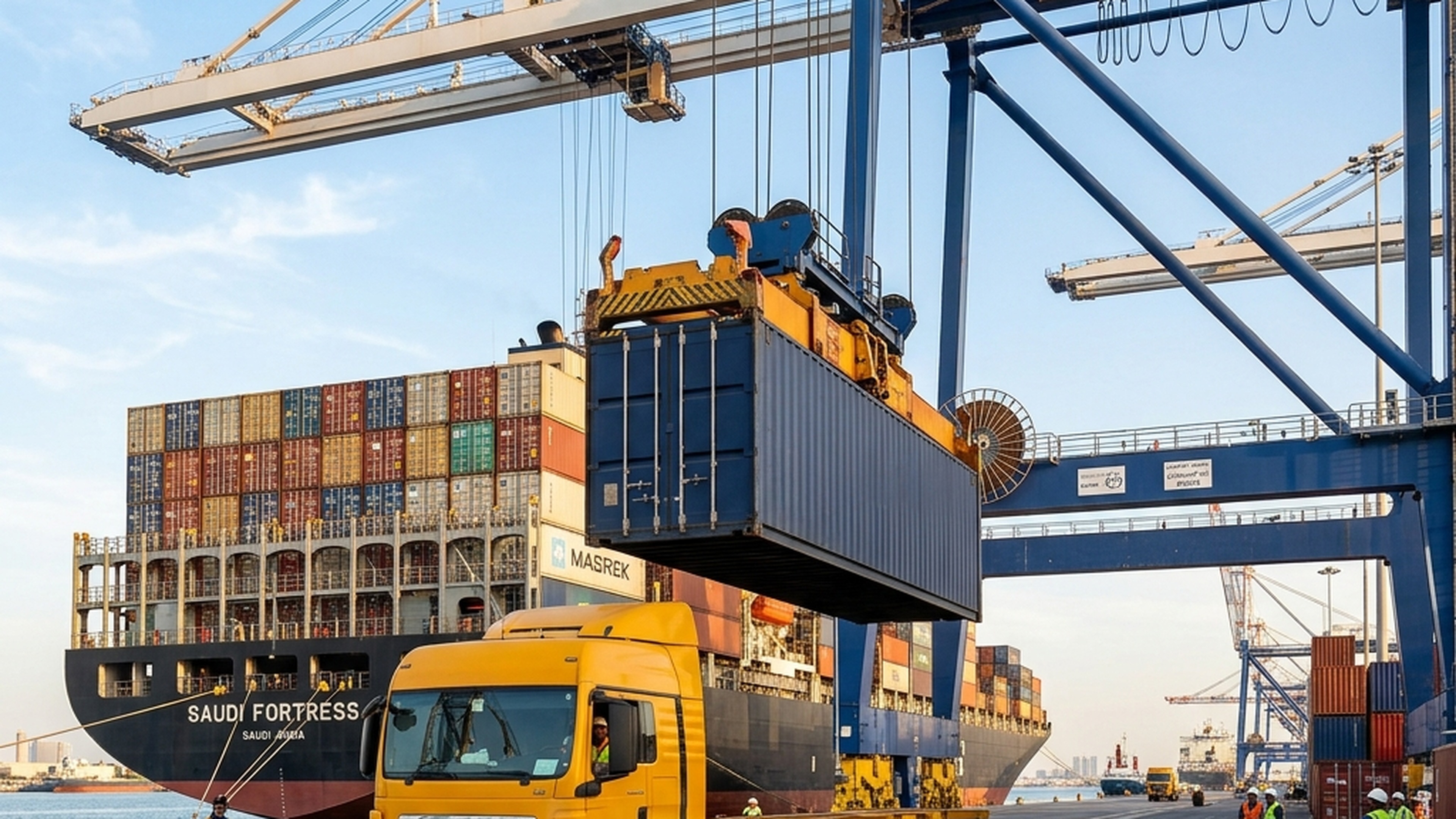
All 11 Incoterms at a glance
| Incoterm | Meaning | Mode |
|---|---|---|
| EXW | Ex Works — buyer collects from seller's premises | Any |
| FCA | Free Carrier — seller hands to buyer's carrier | Any |
| FAS | Free Alongside Ship | Sea only |
| FOB | Free On Board | Sea only |
| CFR | Cost and Freight | Sea only |
| CIF | Cost, Insurance & Freight | Sea only |
| CPT | Carriage Paid To | Any |
| CIP | Carriage & Insurance Paid To | Any |
| DAP | Delivered At Place | Any |
| DPU | Delivered At Place Unloaded | Any |
| DDP | Delivered Duty Paid | Any |
Most Saudi importers, for containerised sea freight, really need to master four of these — FOB, CIF, DAP and DDP.
The 4 that matter for Saudi importers
| Incoterm | Seller pays until… | You (buyer) handle | Best for |
|---|---|---|---|
| FOB (Free On Board) | Goods loaded on the vessel at origin | Sea freight, insurance, KSA customs & delivery | Importers who want to control freight & clearance |
| CIF (Cost, Insurance & Freight) | Destination port (freight + basic insurance to, e.g., Jeddah) | KSA customs, duty/VAT, port charges & delivery | Buyers who want the sea leg handled but keep clearance |
| DAP (Delivered At Place) | Delivered to your named place (not customs-cleared) | Import customs, duty & VAT | Door delivery without the seller touching your customs |
| DDP (Delivered Duty Paid) | Everything — including KSA customs, duty & VAT | Almost nothing | Hands-off buyers who want a single landed price |
Risk and cost are not the same thing
A common trap: assuming whoever pays for freight also carries the risk. Under CIF, the seller pays the freight to the destination port — but the risk transfers to you the moment the goods are loaded on the vessel at origin. So if cargo is damaged mid-voyage on CIF terms, it's your problem to claim, even though the seller booked the ship. That's why the insurance attached to an Incoterm matters as much as the freight it covers — and why understanding *where risk passes* is as important as *who pays*.
The CIF trap most Saudi importers fall into
A CIF Jeddah quote *looks* cheaper than DDP — so buyers pick it. But CIF only covers the goods to the port. Everything after — customs clearance, duty, 15% VAT, SABER/SASO conformity, port storage and delivery to your warehouse — is on you, and it's where the real cost sits. Many importers discover this only when the container is stuck at the quay accruing demurrage. Rule: always confirm whether a quote covers *port, warehouse, or full door delivery* — a cheap CIF number is often the expensive choice. Our freight forwarding cost guide breaks down what "after the port" really costs.
Why EXW is risky for importers
At the other extreme, EXW (Ex Works) looks attractive because the price is lowest — but it makes *you* responsible from the seller's loading dock onward, including export clearance in the origin country, a step a foreign buyer is poorly placed to handle. For most Saudi importers, EXW creates more problems than it solves; FCA or FOB achieves a similar "buyer controls the freight" outcome without saddling you with the seller's export formalities.
DDP and the Saudi customs reality (SABER, VAT, ZATCA)
DDP shifts everything to the seller — including Saudi import formalities. That's convenient, but only if the seller genuinely understands the Kingdom's requirements: SABER/SASO product conformity, correct HS classification, 15% VAT, and ZATCA procedures. A foreign seller who mishandles SABER can leave your goods held at the border regardless of the Incoterm — and you still feel the delay. This is exactly why many experienced Saudi importers prefer FOB or CIF and use a local forwarder to control clearance — see our customs clearance in Saudi Arabia guide.
Incoterms, insurance and documents
Two practical points that catch importers out. Insurance: CIF and CIP oblige the seller to arrange cargo insurance — but often only minimum cover, which may not be enough for high-value goods; you can (and often should) arrange your own. Documents: the Incoterm shapes who provides the Bill of Lading, commercial invoice, packing list and certificate of origin, and who is named on them — errors here cause customs delays. Agreeing the term clearly up front, in writing, avoids disputes when the cargo arrives.
Common Incoterms mistakes
- Picking CIF on price alone and forgetting the entire post-port cost stack.
- Confusing who pays with who bears risk (see CIF above).
- Accepting EXW and inheriting the seller's export clearance.
- Not specifying the exact named place — "DAP Riyadh" is vague; "DAP [your warehouse address]" is not.
- Assuming DDP means zero involvement — if the seller botches SABER/VAT, your goods still wait.
FCA — the modern alternative to FOB for containers
Here's something most importers don't know: for containerised cargo, the ICC actually recommends FCA (Free Carrier) over FOB. FOB was written for goods loaded over a ship's rail — but a container is handed over at a terminal days before it's actually loaded, so under FOB there's a gap where neither party clearly carries the risk. FCA closes that gap: the seller's responsibility ends when the container is handed to your nominated carrier at the agreed point. If you're importing containers to Saudi Arabia and want to control the main freight, FCA is often the cleaner, more accurate choice than FOB — even though FOB stays far more common out of habit.
Which Incoterm for air freight?
The sea-only terms — FAS, FOB, CFR, CIF — should not be used for air cargo, even though suppliers sometimes quote them out of habit. For air, use the "any mode" terms: FCA (you control the main carriage), CPT/CIP (seller pays carriage, CIP adding insurance), or DAP/DDP (delivered). Putting a sea term on an air shipment creates ambiguity about exactly where risk and cost pass — worth correcting before you confirm the order.
CIF vs DDP: who pays what, side by side
| Cost / task | CIF Jeddah | DDP (your door) |
|---|---|---|
| Origin charges & export clearance | Seller | Seller |
| Main sea freight | Seller | Seller |
| Basic marine insurance | Seller (minimum) | Seller |
| Unloading at Jeddah / THC | You | Seller |
| Saudi customs, duty & 15% VAT | You | Seller |
| SABER/SASO conformity | You | Seller |
| Port storage & demurrage | You | Seller |
| Delivery to your warehouse | You | Seller |
The table shows why a CIF headline looks cheap: everything from unloading onward is yours. DDP moves it all to the seller — valuable only if they genuinely handle Saudi customs.
Does the Incoterm change the customs value?
Indirectly, yes. Saudi customs duty and VAT are calculated on the CIF value of the goods (cost + insurance + freight to the port), whatever Incoterm you trade on — so even on an FOB purchase, freight and insurance are added back to reach the customs value. Knowing this lets you sense-check a broker's duty calculation and avoid over- or under-declaration, another reason to have a forwarder who understands Saudi valuation rules handle your clearance.
How to choose — a simple rule
- Want control and the best total cost? Use FOB and appoint a Saudi forwarder for freight + clearance + delivery.
- Want the sea leg handled but keep clearance local? CIF — but budget for everything after the port.
- Want it at your door, you'll clear it? DAP.
- Want one all-in landed price and zero customs work? DDP — only with a seller (or forwarder) who truly knows Saudi customs.
Put the Incoterm in writing — clearly
A discipline point worth its own line: always state the Incoterm and the exact named place in your purchase order and contract — "FOB Shanghai (Incoterms 2020)" or "DAP [full delivery address]", not just three letters in an email. Vague or assumed terms are where disputes start when cargo arrives, and confirming which Incoterms version applies matters because the rules are revised periodically. A minute of clarity up front saves a week of argument at the port.
Why BAFCO
Whatever Incoterm you agree, BAFCO can take it from there — freight, in-house customs clearance (SABER, HS, VAT, ZATCA) and delivery across Jeddah, Riyadh and Dammam, on one accountable chain. We'll even review your supplier's quoted term *before* you sign. See our guide to freight forwarding services in Saudi Arabia.
Frequently asked questions
What are Incoterms?
Standard ICC three-letter rules that define who pays which costs, who bears the risk at each stage, and who handles export/import formalities in an international sale. There are 11; Saudi importers mainly use FOB, CIF, DAP and DDP.
Which Incoterm is best for importing to Saudi Arabia?
For most importers, FOB plus a local Saudi forwarder gives the best control and total cost. CIF is fine if you understand that customs, duty, VAT and delivery after the port are still yours. DDP suits hands-off buyers — but only with a seller who genuinely handles Saudi customs.
What is the difference between CIF and DDP for a Saudi import?
CIF covers the goods only to the destination port; you handle Saudi customs, duty, 15% VAT and delivery. DDP covers everything to your door including customs and taxes. CIF looks cheaper but usually isn't once post-port costs are counted.
Does the Incoterm affect SABER and VAT?
Yes. Under DDP the seller is responsible for Saudi import formalities including SABER/SASO conformity and 15% VAT; under FOB/CIF/DAP you (or your forwarder) handle them. A seller who mishandles SABER can get goods held regardless of the term.
Why do Saudi importers often prefer FOB?
Because it lets them control the freight and, crucially, the customs clearance through a local forwarder who knows SABER, HS classification and ZATCA — usually the lowest total landed cost with the fewest surprises.
Is EXW a good idea for a Saudi importer?
Usually not. EXW makes you responsible from the seller's dock, including export clearance abroad — a step you're poorly placed to handle. FCA or FOB gives similar control without that burden.
