


China is Saudi Arabia's biggest source of imports — from machinery and electronics to building materials and consumer goods. If you're sourcing from China, the shipping decision (and the customs that follows it) has a direct line to your margins. Most guides on this lane are written by Chinese forwarders and stop at the port. This one adds the part that actually decides whether your cargo clears smoothly: the Saudi side.
We're BAFCO International — 30 years handling China–Saudi imports into Jeddah, Riyadh and Dammam, with in-house customs and our own container terminals. Here are the routes, the 2026 costs, the transit times, and the clearance realities.
Get a China–Saudi shipping quote from BAFCO — freight *and* Saudi clearance on one chain.
Your four routes from China
- Sea freight (FCL) — the workhorse for anything sizeable; cheapest per unit.
- Sea freight (LCL) — small volumes consolidated into a shared container.
- Air freight — fast, for urgent or high-value goods.
- DDP (Delivered Duty Paid) — an all-in service where the seller/forwarder handles everything to your door, including duty and VAT (with caveats — see below).
The right choice depends on volume, urgency and value — and, crucially, on who you trust to handle Saudi customs.
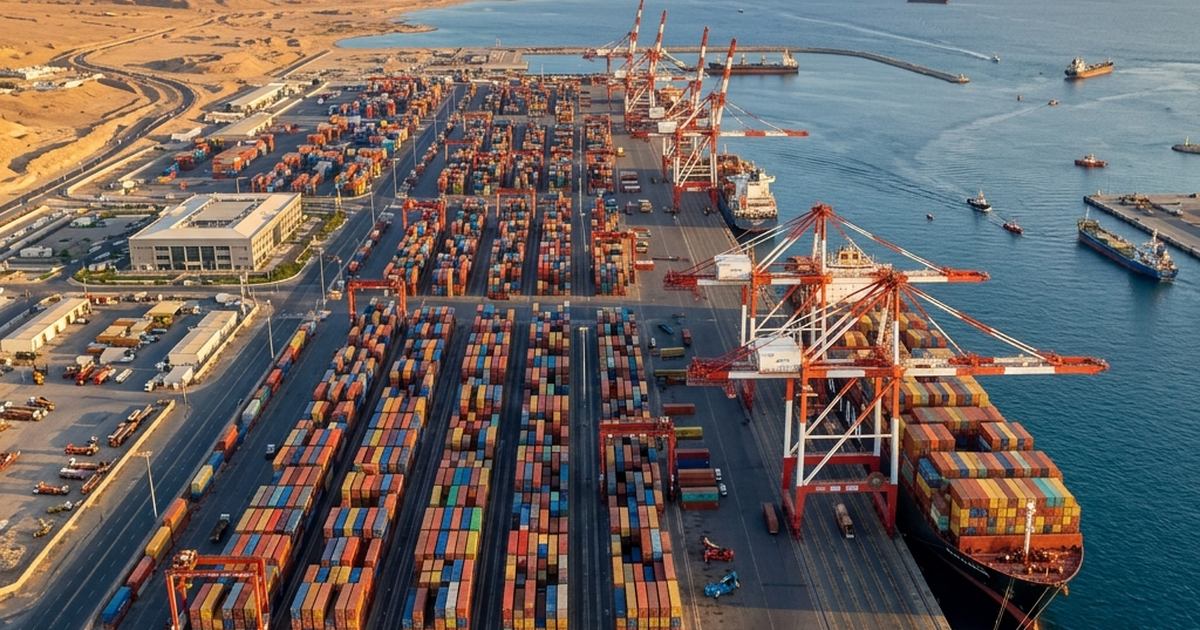
Sea freight from China to Saudi Arabia
Sea is how most China–Saudi cargo moves, arriving at Jeddah Islamic Port (Red Sea) or King Abdulaziz Port, Dammam (Gulf).
- Transit: roughly 14–20 days port-to-port for FCL; LCL adds ~a week (10–15+ days) for consolidation.
- Indicative cost (2026): a 20ft FCL around USD 5,085–6,215 and a 40ft around USD 6,615–8,085 into Jeddah/Dammam — highly variable with capacity, season and geopolitics (Red Sea routing has been volatile).
Rates move fast on this lane, so treat any figure as indicative and confirm at booking.
Air freight from China to Saudi Arabia
For urgent or high-value goods, air moves in ~3–5 days airport-to-airport. Rates are volatile — 2026 has seen sharp swings, with general cargo around USD 6–7/kg at times — and are priced on chargeable weight (see our air freight cost guide). Air suits samples, spares, electronics and anything where the cost of waiting outweighs the freight premium.
DDP shipping — convenient, but read the caveats
DDP has become popular on this lane because it's simple: one price, seller handles freight, customs, duty and VAT, delivered to your door. DDP air runs roughly USD 5–10/kg all-in; DDP sea is quoted per CBM. The catch: DDP is only as good as the party running your Saudi clearance. If the Chinese forwarder's clearance is done on under-declared values or without proper SABER conformity, the risk lands on *you* as the importer of record — held cargo, penalties, or goods that can't legally be sold. DDP can be excellent; just make sure the Saudi-side compliance is genuine, not a shortcut. See our Incoterms guide.
Costs and transit at a glance (indicative 2026)
| Route | Transit | Indicative cost |
|---|---|---|
| Sea FCL (20ft) | ~14–20 days | ~USD 5,085–6,215 |
| Sea FCL (40ft) | ~14–20 days | ~USD 6,615–8,085 |
| Sea LCL | ~10–15+ days | from ~USD 20/CBM |
| Air freight | ~3–5 days | ~USD 6–7/kg (volatile) |
| DDP air | ~5–8 days | ~USD 5–10/kg all-in |
*(Indicative — ask BAFCO for a live quote.)*
The Saudi side: customs and SABER for Chinese goods
This is where China-only guides go quiet — and where cargo actually gets stuck. Goods from China must meet SASO standards and carry the right SABER conformity (PCoC + SCoC) before they clear Saudi customs. Chinese factories aren't always familiar with Saudi requirements, so conformity is frequently the weak link. On arrival, your customs declaration is filed through FASAH to ZATCA, duty is assessed on the CIF value by HS code, and 15% VAT applies. A Saudi-based forwarder who controls this side — rather than relying on the shipper's paperwork — is what keeps a China shipment moving. See our how to import into Saudi Arabia guide.
Common pitfalls on the China–Saudi lane
- Trusting DDP blindly — cheap DDP often means under-declared customs, and you carry the risk.
- No SABER before shipping — Chinese suppliers may not arrange it; without it, no clearance.
- Choosing LCL when the volume says FCL — paying more and waiting longer.
- Ignoring Red Sea routing volatility — build buffer into transit and cost.
Why China dominates Saudi imports
China has been Saudi Arabia's largest trading partner for years, and the flow of goods only grows as Vision 2030 drives construction, manufacturing and consumer demand. Electronics, machinery, building materials, furniture, textiles, solar and industrial equipment — a huge share originates in China. That scale means well-developed shipping lanes, frequent sailings and competitive rates; it also means a crowded, uneven market of freight offers where the cheapest quote often hides the weakest compliance. Understanding the routes *and* the Saudi-side requirements is what separates a smooth supply line from a stop-start one.
How to choose your shipping method from China
The decision comes down to three questions. How big is the shipment? Under ~13 CBM usually favours LCL or air; above it, FCL. How urgent is it? Days matter → air; weeks are fine → sea. How valuable and compliance-sensitive is it? High-value or regulated goods reward the control of a managed service over a cheap all-in DDP. Run those three questions and the right mode is usually obvious — and a good forwarder tells you honestly rather than pushing whatever pays them most.
Get the documents and quality right before shipping
Two things done at the China end save the most pain at the Saudi end. First, quality and quantity control — a pre-shipment check catches problems while the goods are still with the supplier, not after they've crossed an ocean. Second, documents and SABER — make sure the supplier provides an accurate commercial invoice and packing list, and that the required SABER conformity is arranged. Chinese factories often need prompting on this, since it's a Saudi-specific requirement they may not know. Correct paperwork agreed up front is what lets cargo clear cleanly on arrival.
Plan your China order timeline
A common mistake is treating shipping as an afterthought once goods are ready. Build the timeline backwards from when you need the stock: production lead time at the factory, plus SABER and document preparation, plus transit (days by air, weeks by sea), plus Saudi customs clearance and delivery. For sea freight especially, that total can run several weeks — so ordering with the shipping and clearance time built in avoids the expensive scramble of air-freighting goods you could have sent by sea if you'd planned earlier.
Red Sea routing and rate volatility
One current reality worth flagging: sea freight into Jeddah on the Red Sea has seen routing disruption and rate volatility in recent times, with some services re-routing and rates swinging with the situation. It's another reason to treat any quoted rate as indicative, build buffer into your transit expectations, and work with a forwarder who has reliable carrier space rather than chasing the lowest headline number.
Sea, air or express — a quick comparison
| Priority | Best route from China |
|---|---|
| Lowest cost, larger volume | Sea FCL |
| Small volume, cost-sensitive | Sea LCL |
| Speed on urgent/high-value goods | Air freight |
| Simplicity, small parcels | Express/courier |
| One all-in price to the door | DDP (with proper Saudi clearance) |
There's no single "best" way to ship from China — only the best fit for a shipment's size, urgency, value and how much of the process you want handled for you. Many importers use two or three in parallel: sea for the bulk restock, air for urgent lines, express for samples. A forwarder handling all of them on one account lets you switch mode by shipment without switching provider.
What to check in a China shipping quote
A cheap number from an unknown forwarder is where China–Saudi shipments go wrong. Before you accept a quote, check what it actually includes: is it port-to-port or door-to-door? Does it cover Saudi customs clearance, duty and VAT, or stop at the port? Is SABER conformity arranged, and by whom? Are destination charges (THC, handling, delivery) included or waiting to surprise you on arrival? And who is the importer of record — because that's who carries the compliance risk. A transparent, itemised quote from a forwarder accountable on the Saudi side is worth more than a lower headline number that unravels at Jeddah.
Cargo insurance on the China lane
Long ocean voyages and multiple handling points mean things occasionally go wrong — damage, loss, a container lost overboard. The carrier's liability is limited and rarely covers your goods' full value, so for anything significant, arrange all-risk marine cargo insurance sized to the real value. On a lane as long as China–Saudi Arabia, the premium is small against the exposure, and a forwarder can arrange cover as part of the booking.
Why BAFCO for shipping from China to Saudi Arabia
BAFCO handles both ends of the lane on one chain: competitive China–Saudi sea and air freight, then in-house Saudi customs, SABER, duty/VAT and delivery — so nothing stalls at Jeddah or Dammam. Thirty years, owned terminals, four branches. Compare us in our 10 best freight forwarders in Saudi Arabia guide.
Frequently asked questions
How long does shipping from China to Saudi Arabia take?
Sea freight is roughly 14–20 days port-to-port for FCL and about 10–15+ days for LCL; air freight is around 3–5 days airport-to-airport. Door-to-door adds customs clearance and local delivery.
How much does it cost to ship from China to Saudi Arabia in 2026?
Indicatively, a 20ft FCL runs about USD 5,085–6,215 and a 40ft about USD 6,615–8,085; air freight around USD 6–7/kg; DDP air roughly USD 5–10/kg all-in. Rates are volatile — confirm a live quote.
What is DDP shipping from China to Saudi Arabia?
DDP (Delivered Duty Paid) is an all-in service where the seller/forwarder handles freight, customs, duty and VAT to your door. It's convenient, but you remain the importer of record — so ensure the Saudi customs and SABER conformity are done properly.
Do goods from China need SABER for Saudi Arabia?
Yes — most regulated products need SABER conformity (PCoC and a per-shipment SCoC) before they clear Saudi customs. Chinese suppliers aren't always familiar with it, so it's often the weak link.
Which is better, sea or air, from China to Saudi Arabia?
Sea for cost and volume; air for speed and high-value or urgent goods. Many importers ship the bulk by sea and urgent top-ups by air.