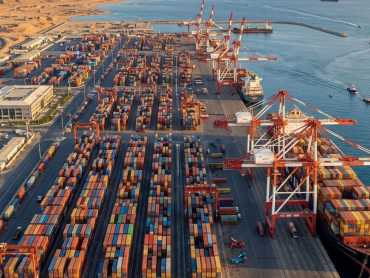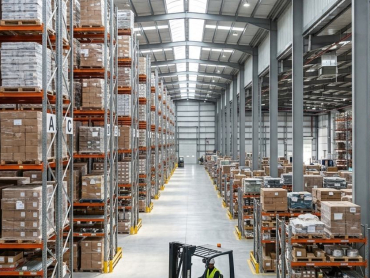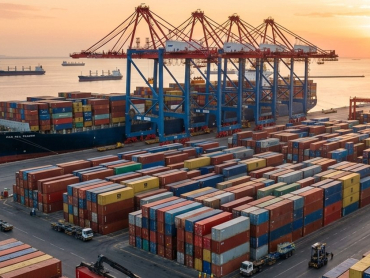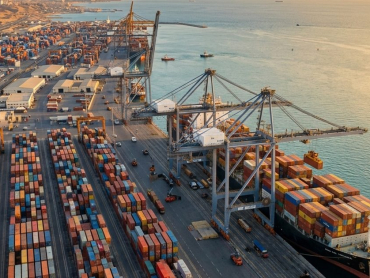
Saudi Arabia is in the middle of the biggest logistics build-out in its history. Vision 2030 wants the Kingdom to be a global trade hub, the National Transport & Logistics Strategy is targeting logistics costs down to 6% of GDP, and e-commerce has already pulled roughly 28 million Saudi shoppers online. Translation: more cargo, more warehousing and more last-mile delivery than most brands can profitably handle on their own.
That’s why importers, retailers and fast-growing e-commerce brands are handing their warehousing, transport and fulfilment to third-party logistics (3PL) providers instead of buying racking, trucks and customs teams themselves. But “a 3PL saves you money” is easy to say and hard to prove.
We’re BAFCO International. We’ve run warehousing, freight and distribution across Jeddah, Riyadh and Dammam for 30 years, so this guide skips the buzzwords. Below are the 9 concrete ways partnering with a 3PL lowers your total logistics cost and risk in Saudi Arabia — and, for each one, exactly why it saves money.
Not sure which partner fits? Compare the field in our guide to the best 3PL companies in Saudi Arabia — this post explains the savings; that page helps you choose.
Why outsourcing logistics is a cost decision, not just an ops decision
Running your own warehouse, fleet and customs desk means paying fixed costs — rent, racking, forklifts, drivers, software licences and salaries — every single month, whether your containers are moving or your shelves are half-empty. A 3PL’s core trick is turning those fixed costs into variable, pay-for-what-you-use costs, then spreading its own infrastructure across dozens of clients so no one carries the full bill.
That single shift is where most of the saving lives. Here are the nine ways it shows up on your invoice.
The 9 ways a 3PL cuts your logistics cost in Saudi Arabia
1. Shared warehousing replaces fixed overhead with pay-per-use space
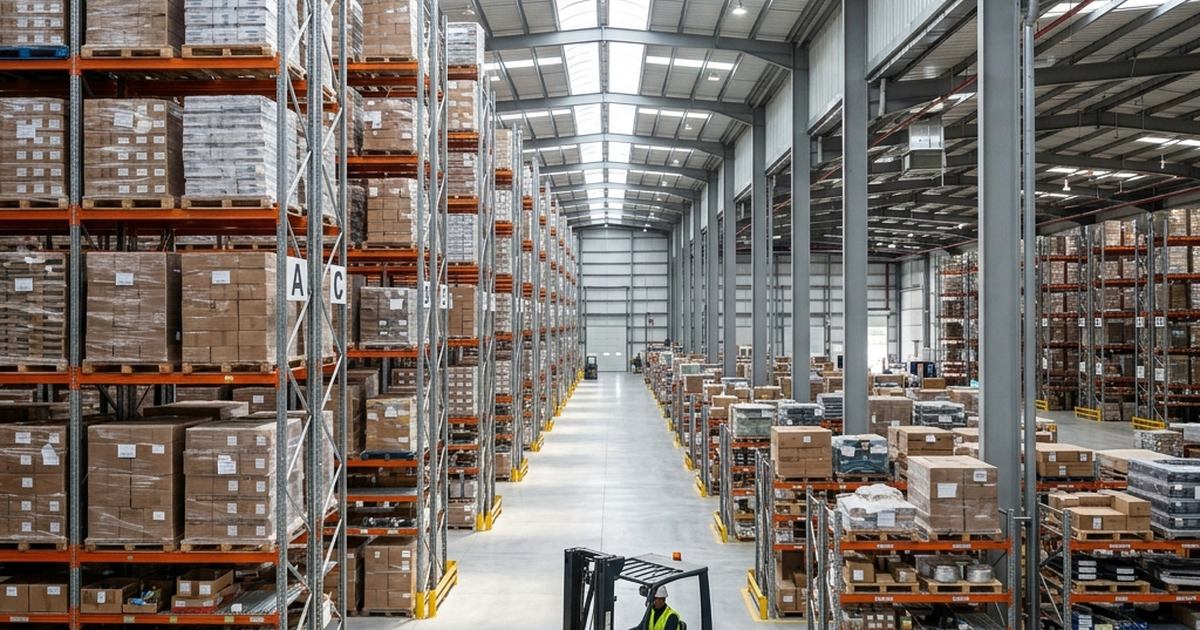
Leasing and fitting out your own warehouse in Jeddah or Riyadh means a multi-year commitment, racking, MHE, staff and utilities — paid in full even during your slow months. With shared warehousing, you rent only the pallet positions and handling you actually use, on flexible terms.
– Why it saves money: you stop paying for empty space. Fixed rent and idle labour become a variable line that rises and falls with your real volume — the biggest single cost lever a 3PL pulls.
2. Consolidated freight buying power beats your solo rates
A 3PL moves thousands of containers a year, so it books ocean and air capacity at contract rates a single shipper simply can’t match. It can also consolidate your part-load (LCL) with other cargo instead of you paying for a half-empty container.
– Why it saves money: you ride the provider’s volume discounts and consolidation, cutting your per-shipment and per-unit freight cost without changing what you ship.
3. Fewer demurrage and customs errors at the port
Slow customs clearance is a silent budget-killer. Saudi ports allow only limited free time before demurrage and detention accrue per container, per day. A 3PL with in-house customs brokers and owned container terminals pre-clears paperwork and moves boxes before the meter starts.
– Why it saves money: you avoid per-day demurrage, storage and — worst case — re-export bills caused by a wrong HS code or a missing conformity certificate lodged with ZATCA.
4. Scalable peak capacity — without over-building for the spike
Ramadan, Hajj season and Q4 e-commerce peaks can triple your volume for a few weeks. Build your own operation for that peak and you pay for idle capacity the other 40 weeks of the year.
– Why it saves money: a 3PL flexes space, labour and trucks up and down on demand, so you buy peak capacity only when you need it instead of financing it year-round.
5. Multi-hub distribution slashes last-mile cost
Saudi Arabia is vast — Jeddah to Riyadh is ~950 km, Riyadh to Dammam another ~400 km. Shipping every order from one city means long, expensive final legs. A 3PL with stock positioned in all three hubs delivers from the node nearest the customer.
– Why it saves money: shorter last-mile distances cut fuel, trucking and failed-delivery costs on every order — and speed up delivery, which lifts conversion for e-commerce brands.
6. Zero capex on terminals, fleet and warehouse tech
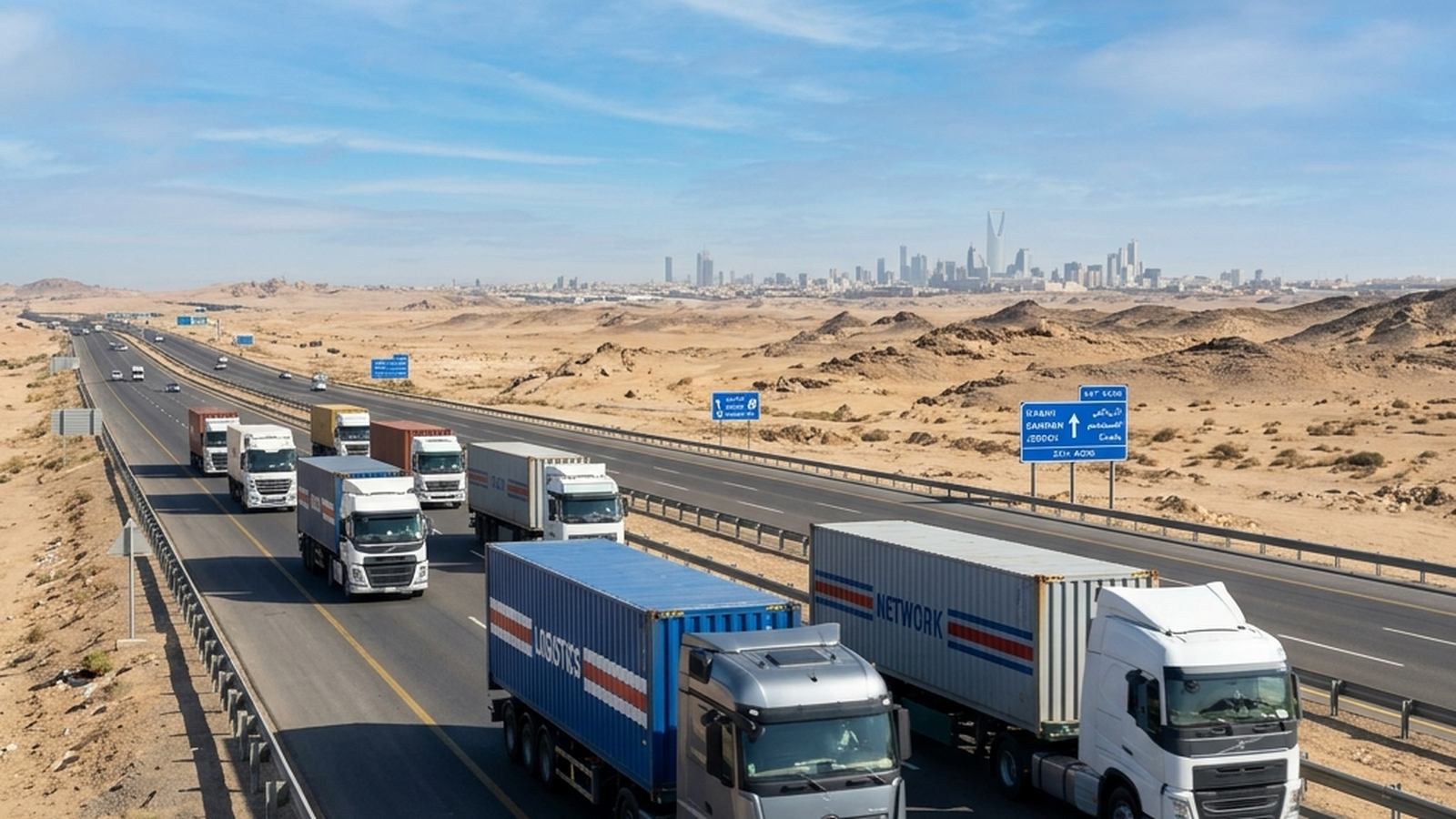
Cranes, reach-stackers, a truck fleet, racking and a warehouse management system are enormous capital outlays — plus maintenance, insurance and depreciation. Partner with an asset-backed 3PL and that hardware is already bought, staffed and running.
– Why it saves money: no capital sunk into depreciating logistics assets means that cash stays in product, marketing and growth — where it earns a far better return.
7. Technology and visibility remove hidden costs
Good 3PLs run warehouse (WMS) and transport (TMS) systems with real-time inventory and shipment tracking. That visibility is not a gadget — it’s a cost control.
– Why it saves money: accurate inventory means fewer stockouts and less overstock, lower shrinkage and damage, and far fewer panic air-freight shipments to cover a shortage you didn’t see coming.
8. Faster, Vision-2030-era market entry
Setting up your own logistics in a new city can take months of leasing, hiring and licensing. An FMCG or e-commerce brand expanding from Jeddah into the Eastern Province can plug into a 3PL’s existing network and go live in weeks, not months.
– Why it saves money: you capture demand during Saudi Arabia’s e-commerce and Vision 2030 growth window instead of paying build-out costs and losing sales while you wait.
9. Cheaper returns and reverse logistics
Returns are unavoidable in retail and e-commerce — and processing them in-house (inspection, restocking, refurbishment, disposal) is labour-heavy. A 3PL runs shared returns operations at scale.
– Why it saves money: you pay a per-item variable rate for returns handling instead of staffing a full reverse-logistics desk that sits idle between spikes.
In-house logistics vs a 3PL — where the money actually goes
The cheapest-looking option on paper (do it yourself) is rarely the cheapest in practice, because in-house logistics loads you with fixed costs regardless of volume. Here’s the structural difference:
| Cost area | In-house logistics | 3PL partner |
|---|---|---|
| Warehouse space | Fixed multi-year lease, paid in full year-round | Variable — pay per pallet/position used |
| Labour | Permanent payroll, incl. peak over-staffing | Shared, scales with your volume |
| Equipment (racking, MHE, fleet) | Your capex + maintenance + depreciation | Included; provider owns the assets |
| Freight rates | Your own (lower) volume | Provider’s consolidated volume discounts |
| Technology (WMS/TMS) | Licence, implement, maintain yourself | Included in the service |
| Customs & compliance | Hire and train in-house brokers | In-house team, ZATCA/SABER handled |
| Peak capacity | Build for the spike, idle the rest of the year | Flex up and down on demand |
| Scaling to a new city | Months of lease, hire, license | Live in weeks on an existing network |
For most growing brands — especially those running under a few thousand pallet positions or with uneven, seasonal demand — the 3PL’s per-unit cost comes in below the fully loaded in-house cost, because the provider spreads its fixed infrastructure across many clients.
3PL or 4PL — which model fits (and saves) best?
Outsourcing isn’t all-or-nothing. Knowing the difference keeps you from over-buying management you don’t need — or under-buying coordination you do.
| 3PL (third-party logistics) | 4PL (fourth-party logistics) | |
|---|---|---|
| What it does | Executes warehousing, freight, transport, customs | Designs and manages your whole supply chain, often across multiple 3PLs |
| Best for | Brands that want to outsource operations and keep some oversight | Complex, multi-vendor supply chains that want a single control tower |
| Assets | Usually owns warehouses, terminals, fleet | Typically non-asset; coordinates providers |
| Where it saves | Lower unit costs on execution: space, freight, labour | Optimises the network and removes duplication across vendors |
Most importers, retailers and e-commerce brands in Saudi Arabia start with a strong 3PL and layer on 4PL-style supply-chain management as their volumes and complexity grow.
How to capture the savings — a quick checklist
- Map your fixed costs first — rent, racking, fleet, WMS, permanent staff. That total is what a 3PL converts to variable.
- Match the model to your demand — seasonal or uneven volume favours a 3PL most strongly.
- Prioritise multi-hub coverage (Jeddah, Riyadh, Dammam) to cut last-mile cost across the Kingdom.
- Check in-house customs capability so demurrage and clearance errors don’t erase the savings.
- Favour asset-backed partners — owned terminals, warehousing and fleet mean fewer sub-contractor markups.
- Insist on inventory visibility (WMS/TMS) — it’s how you avoid stockouts, shrinkage and emergency freight.
Why an asset-backed Saudi 3PL saves the most
The savings above only fully materialise when your partner actually owns the network moving your goods. Sub-contracted warehousing and trucking add a markup at every handoff; owned assets don’t. With 30 years in the Kingdom, owned container terminals, 100,000+ of warehousing capacity, an in-house customs team and branches in Jeddah, Riyadh, Dammam and Jubail, BAFCO turns your fixed logistics overhead into a lean variable cost — and clears cargo before the demurrage clock starts.
See how the leading 3PL companies in Saudi Arabia stack up, explore our warehousing and container terminals, or read our full guide to freight forwarding services in Saudi Arabia.
Frequently asked questions
How do 3PL companies in Saudi Arabia actually reduce logistics costs?
By converting fixed costs into variable ones and spreading infrastructure across many clients. You pay only for the warehouse space, labour and transport you use, ride the provider’s consolidated freight discounts, avoid demurrage through faster customs clearance, and skip the capital cost of terminals, fleet and warehouse technology.
Is a 3PL cheaper than running my own warehouse and fleet in Saudi Arabia?
For most growing or seasonal brands, yes. Running your own operation means paying rent, staff, equipment and software year-round regardless of volume. A 3PL charges variable rates and absorbs the fixed infrastructure, so the per-unit cost is usually lower — unless you have very high, perfectly steady volume that keeps your own facility fully utilised.
What’s the difference between 3PL and 4PL — and which saves more?
A 3PL executes logistics (warehousing, freight, transport, customs). A 4PL designs and manages your entire supply chain, often coordinating several 3PLs as a single control tower. A 3PL saves on execution costs; a 4PL saves by optimising a complex, multi-vendor network. Most Saudi brands start with a 3PL and add 4PL management as they scale.
How much can a business save by outsourcing to a 3PL in KSA?
It depends on your volume, seasonality and current fixed costs, so treat any single percentage with caution. The biggest savings come from eliminating idle warehouse and labour capacity, cutting last-mile distance through multi-hub distribution, avoiding demurrage, and freeing capital that would otherwise sit in trucks and racking.
When does it make sense to switch from in-house logistics to a 3PL?
When your demand is uneven or seasonal, when you’re expanding into new Saudi cities, when peak-season capacity forces you to over-build, or when logistics is pulling capital and attention away from your core product. Steady, fully-utilised, single-site operations are the main case where in-house can still compete.
Do 3PL providers handle customs clearance and ZATCA/VAT compliance?
An experienced Saudi 3PL clears cargo daily and handles the customs declaration, SABER/SASO conformity and ZATCA/VAT paperwork in-house. That reduces the risk of delays, fines, demurrage and rejected goods — a major hidden cost for companies that try to manage clearance themselves.
How does Vision 2030 affect 3PL logistics costs in Saudi Arabia?
Vision 2030 and the National Transport & Logistics Strategy are actively driving logistics costs down — targeting 6% of GDP — through new ports, digitised customs and free zones. Partnering with an established 3PL lets brands ride that improving, lower-cost infrastructure and expand quickly during the e-commerce boom.
Related reads
- Everything You Need to Know About Freight Forwarding Services in Saudi Arabia
- 10 Best Freight Forwarders in Saudi Arabia for Hassle-Free Shipping
- 9 Hidden Costs of Freight Forwarding in Saudi Arabia (2026)
- Best 3PL Companies in Saudi Arabia
Cut your logistics cost — talk to a 30-year Saudi 3PL
Stop financing racking, trucks and idle capacity you only need at peak. Send BAFCO your volumes and lanes, and we’ll show you where outsourcing warehousing, freight and distribution across Jeddah, Riyadh and Dammam takes cost out of your supply chain — with 30 years of Saudi logistics experience behind every number.
📞 +966 12 642 0333
📧 inquiry@bafcointl.com
🚚 Request a 3PL consultation
📍 Jeddah HQ · Branches in Riyadh, Dammam & Jubail